
National | Housing
CMHC Survey: Mortgage Stress Easing but Nearly 4 in 10 Canadians Still Worried About Payments
Canada Mortgage and Housing Corporation released its 2026 Mortgage Consumer Survey yesterday, finding that mortgage consumer confidence has improved but that nearly four in ten respondents remain concerned about making their mortgage payments.

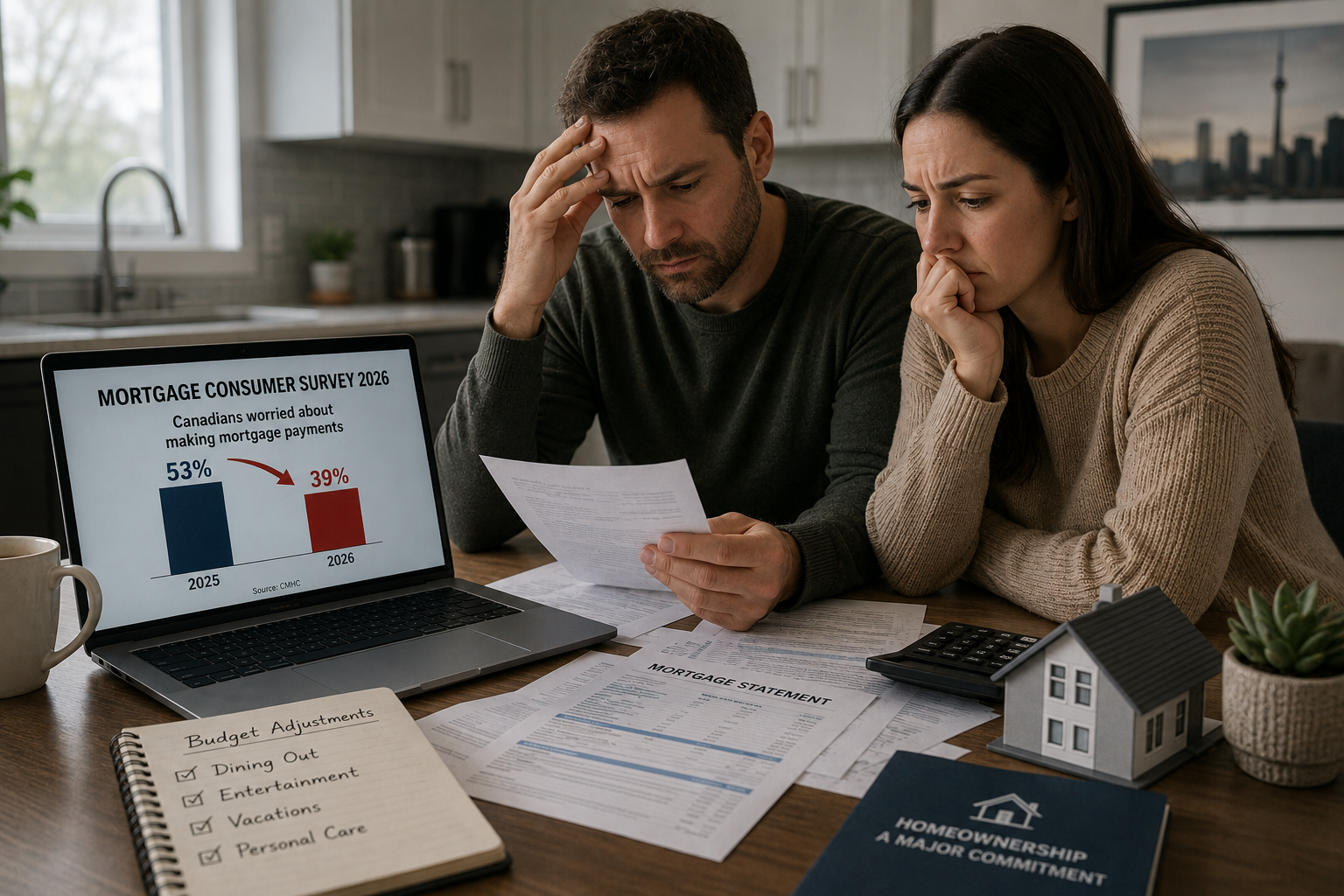
Canada Mortgage and Housing Corporation released its 2026 Mortgage Consumer Survey yesterday, finding that mortgage consumer confidence has improved but that nearly four in ten respondents remain concerned about making their mortgage payments. The proportion of Canadians worried about defaulting dropped 14 percentage points — to 39 percent in 2026 from 53 percent in 2025. Newswire.ca
The survey, which polled more than 4,100 Canadians who completed a mortgage transaction in the 18 months prior to February 2026, suggests the worst of pandemic-era payment shock may be easing — but a significant share of households are still tightening budgets to stay current. Among those who renewed a mortgage, 35 percent reported increased financial pressure due to interest rate changes, with payments rising an average of $375 per month. It took recent homebuyers an average of 4.4 years to save for a down payment, with savings and prior home equity serving as the primary funding sources. Twenty-three percent received a financial gift to help with the down payment. CMPNewswire.ca
The most common expenses being reduced by mortgage consumers include dining out, entertainment and leisure, vacations, and personal care. The survey does not capture renters or prospective buyers locked out of ownership markets, meaning the full picture of housing financial stress is likely worse than the headline figure suggests. Newswire.ca
Why it matters: The CMHC survey is a key annual benchmark for understanding household resilience in the housing system. The improvement from 53 percent to 39 percent is meaningful, but the fact that roughly two-fifths of mortgage holders remain worried about making payments — in a rate environment already at 2.25 percent — signals that the affordability problem remains structurally embedded, not merely cyclical.