
National | Immigration
Federal Court Coordinates Dozens of Constitutional Challenges Against Bill C-12’s Asylum Restrictions

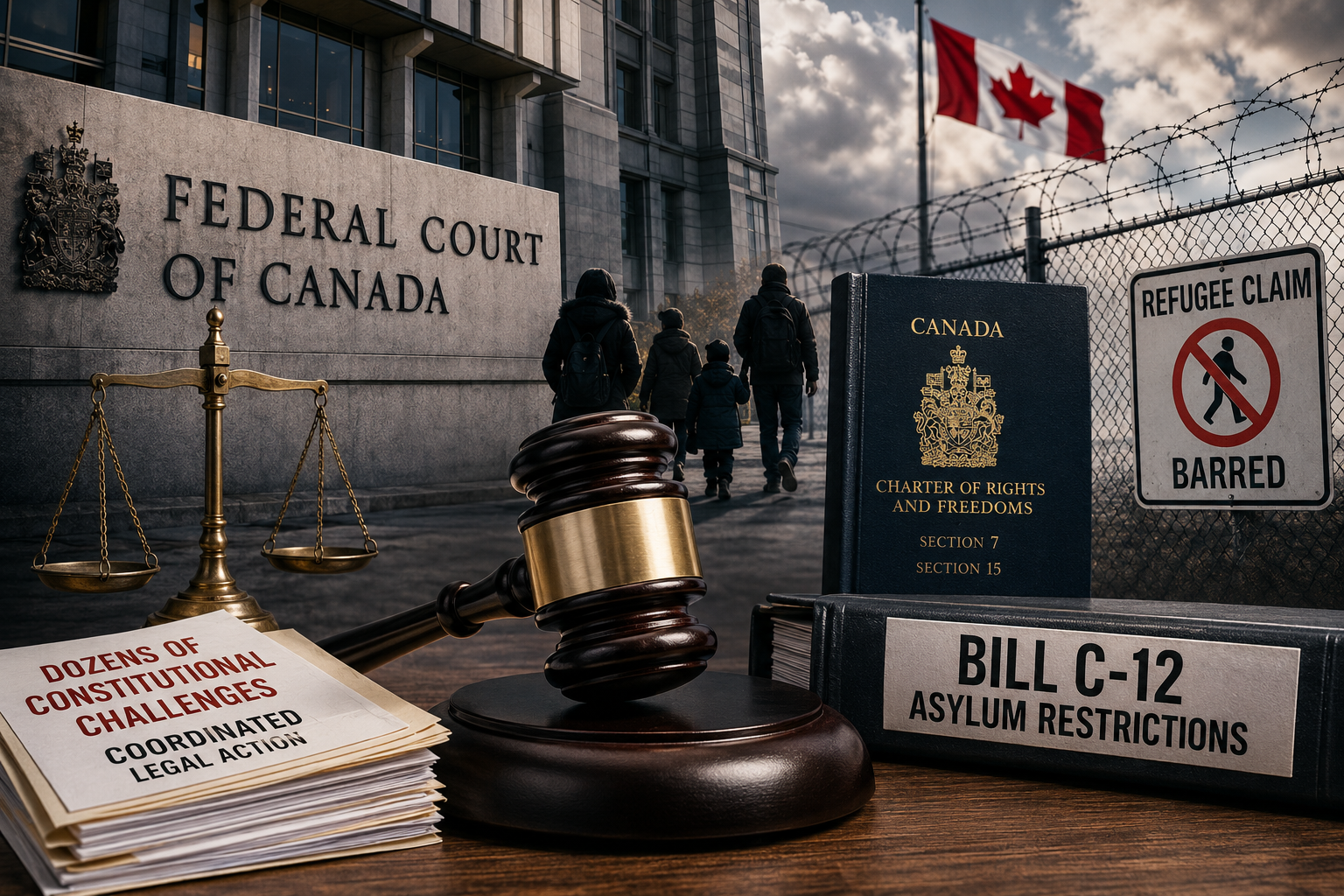
A Federal Court associate judge has granted a request to case-manage dozens of constitutional challenges against Ottawa’s new asylum law. Immigration lawyers across Canada are co-ordinating constitutional challenges against the law, with three dozen cases already filed in Federal Court. The coordinated effort is being overseen by the Canadian Association of Refugee Lawyers and the Canadian Immigration Lawyers Association. CBC News
The new law bars people from making refugee claims if more than a year has passed since their first entry into Canada. The law is retroactive to June 24, 2020, and applies to claims made on or after June 3, 2025. Bill C-12 also removes the option of making a refugee claim for people who crossed the Canada-U.S. border irregularly after the June 2025 date. The challenges argue Bill C-12 violates Canada’s Charter of Rights and Freedoms, including Section 7, which guarantees the right to life, liberty and security, and Section 15, which protects against discrimination. At least 39 cases challenging the law have been filed in Federal Court, with immigration lawyers warning the number could increase rapidly in the coming months. According to court documents, as many as 28,000 refugee claims could eventually be affected by the legislation. CBC NewsImmigCanada
Meanwhile, Toronto immigration lawyer Ravi Jain says he has seen a number of clients from countries where they may face persecution — including Iran — or who come from vulnerable groups like the 2SLGBTQ+ community, facing deportation as a result of the new eligibility rules. Over the past year, 17 per cent of asylum claims came from international students, according to IRCC, as students facing expired study permits increasingly turned to the refugee system. CBC News
Why it matters: The constitutional battle over Bill C-12 is now formally organized and moving through the courts. The case-management decision by the Federal Court signals that judges consider the volume of challenges serious enough to warrant a coordinated track. This will be one of the defining immigration legal stories of 2026 and likely 2027. Ottawa will defend the law vigorously; the outcome will determine the future shape of Canada’s asylum eligibility framework.