
National | Economy
Bank of Canada Holds Interest Rate at 2.25% as Economic and Inflation Signals Pull in Opposite Directions

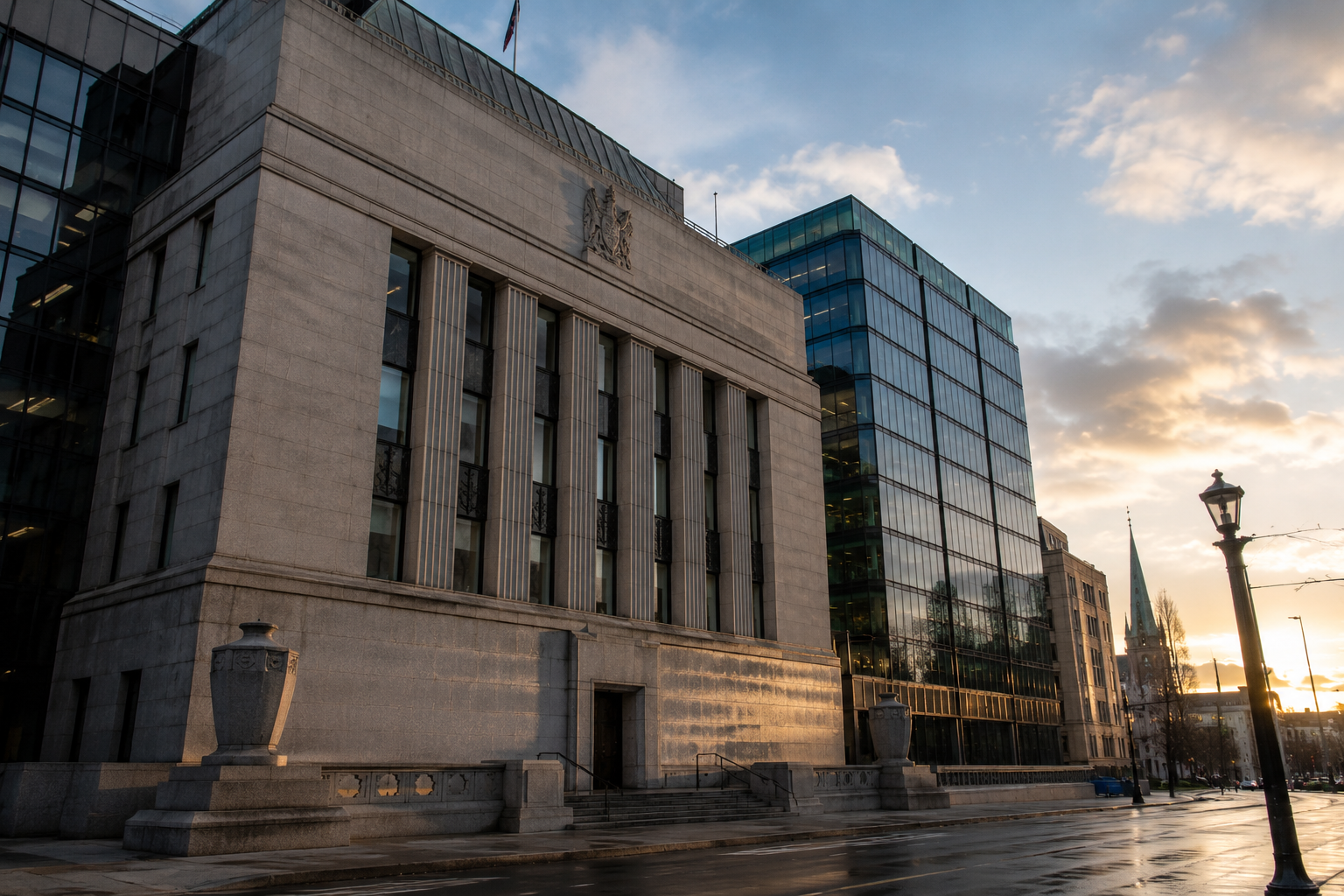
The Bank of Canada left its benchmark interest rate unchanged at 2.25 per cent on June 10, marking the fifth consecutive policy meeting at which rates have remained on hold.
The central bank also maintained the Bank Rate at 2.5 per cent and the deposit rate at 2.20 per cent, a decision that was widely anticipated by financial markets.
The latest announcement highlights the difficult position facing policymakers as they attempt to balance a slowing economy against inflationary pressures driven largely by higher energy costs.
In its accompanying statement, the Bank pointed to signs of weakening economic activity, noting that Canada’s real gross domestic product declined by 0.1 per cent in the first quarter of 2026. The contraction was weaker than expected and marked the first negative quarterly GDP reading in more than five years outside the pandemic period.
The Bank said it expects the economy to remain in a state of excess supply in the near term, even if activity rebounds modestly later this year. Policymakers cited elevated energy prices, ongoing geopolitical tensions, and continued trade uncertainty as factors weighing on economic growth.
At the same time, inflation remains above the Bank’s two per cent target.
Recent increases in energy prices have pushed inflation higher, although the central bank continues to view much of that pressure as temporary. Officials noted there has so far been limited evidence that higher fuel and energy costs are spreading broadly across the economy through sustained increases in the prices of other goods and services.
The Bank currently expects inflation to remain near three per cent before gradually moving back toward its target over time.
Ordinarily, a contracting economy would strengthen the case for lower interest rates. However, labour market data has complicated that picture.
Canada’s unemployment rate fell to 6.6 per cent in May after employers added significantly more jobs than economists had forecast. The stronger-than-expected employment report suggested that parts of the economy remain resilient despite broader signs of slowing growth.
The conflicting signals have left policymakers with little incentive to move aggressively in either direction.
Cutting rates could provide support for economic growth but risks adding pressure to inflation if energy costs remain elevated. Raising rates, meanwhile, could further weaken an economy that has already entered a technical recession following two consecutive quarters of negative GDP growth.
Adding to the uncertainty are ongoing negotiations surrounding the review of the Canada-United States-Mexico Agreement (CUSMA). Any changes affecting North American trade could have significant implications for Canada’s economic outlook and future monetary policy decisions.
For consumers, the Bank’s decision means little immediate change. Variable mortgage rates remain anchored to the prime lending rate, which continues to sit at approximately 4.45 per cent. Borrowers with variable-rate mortgages and lines of credit are therefore unlikely to see significant changes to their payments in the near term.
Attention now shifts to the Bank’s next policy announcement on July 15. That decision will be accompanied by a full Monetary Policy Report, providing policymakers with an opportunity to update their economic forecasts and offer clearer guidance on how they view the balance between slowing growth and persistent inflation pressures.
Until then, financial markets appear increasingly focused on the possibility that interest rates could remain unchanged for longer than previously expected.