
The Canadianist Exclusive | Opinion
Canada Doesn’t Need Less America. It Needs More Canada.
When I was about seven years old, there was a book in my parents’ house called Between Friends.
I remember pulling it off the shelf and flipping through its pages, fascinated by the photographs. There were images of border towns, rivers, farms, cities, bridges, and ordinary people living along the vast line that separates Canada and the United States.

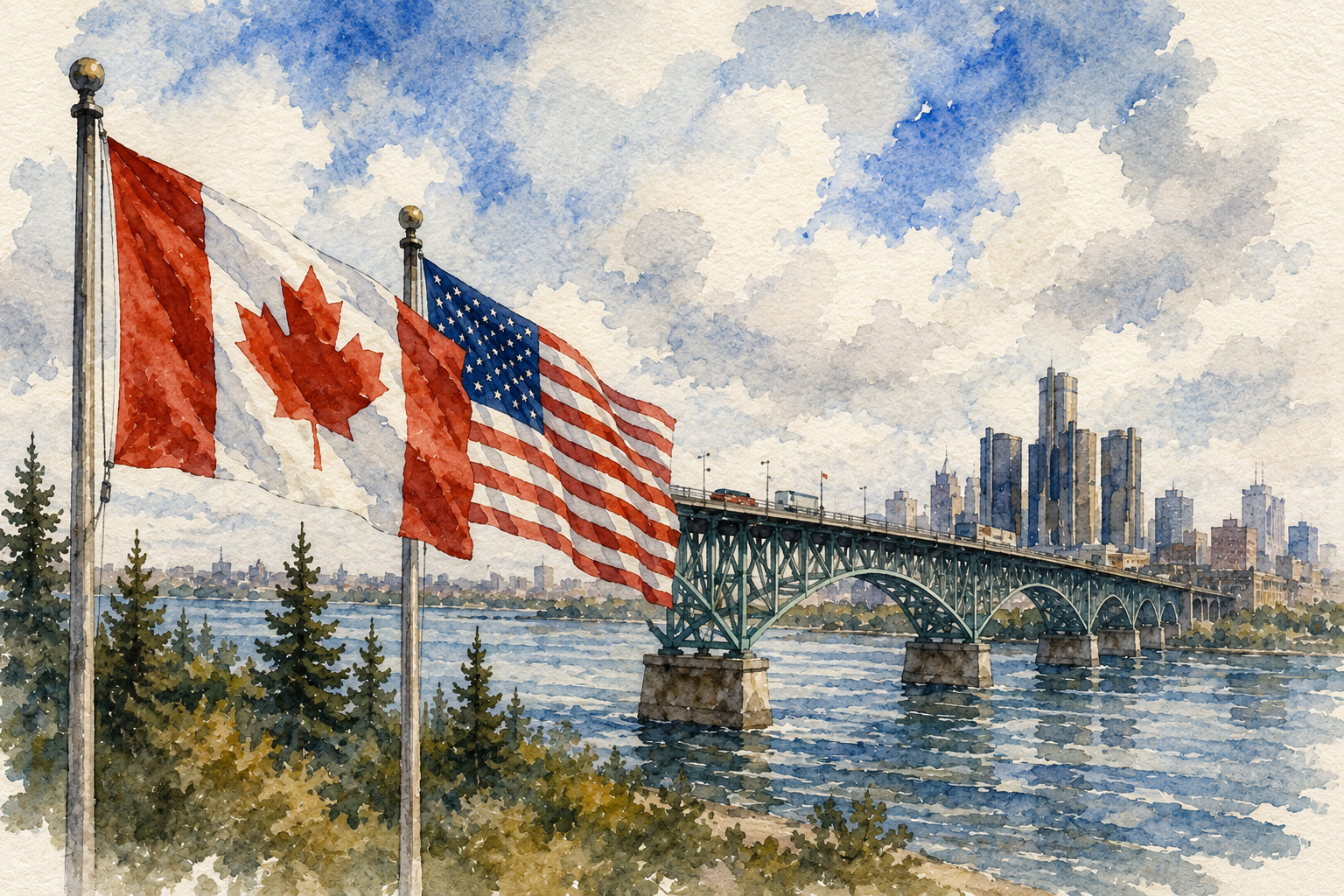
When I was about seven years old, there was a book in my parents’ house called Between Friends.
I remember pulling it off the shelf and flipping through its pages, fascinated by the photographs. There were images of border towns, rivers, farms, cities, bridges, and ordinary people living along the vast line that separates Canada and the United States.
At that age, I understood none of the politics behind it. I knew nothing about trade agreements, diplomacy, tariffs, or foreign policy. What I understood was the feeling the book conveyed.
Two countries side by side.
Separate, but connected.
Different, but familiar.
I hadn’t thought about that book in years until recently, when discussions surrounding America’s upcoming 250th birthday brought it back to mind. What struck me wasn’t the book itself. It was the contrast between the relationship it reflected and the one many Canadians perceive today.
Half a century ago, the title Between Friends captured the spirit of a relationship that, while never perfect, was built on a sense of mutual confidence. Canada and the United States traded together, worked together, defended a continent together, and generally viewed one another as reliable partners.
Today, the mood feels different.
The relationship itself remains extraordinarily important. The United States is still Canada’s largest trading partner by a wide margin. Millions of jobs, countless businesses, and entire industries depend on the economic ties that bind our two countries together. Geography alone guarantees that what happens south of the border will always matter to Canadians.
Yet the conversation has changed.
Canadians now hear regular discussions about tariffs, supply chains, critical minerals, manufacturing capacity, energy security, and economic dependence. American politicians increasingly talk about bringing production home. Governments on both sides of the border are paying closer attention to strategic industries and vulnerabilities in global supply chains.
At the same time, Canadians have been having a separate conversation about our own future.
We’ve been debating housing affordability, productivity, investment, infrastructure, energy development, and whether Canada is creating enough economic opportunity to maintain the standard of living previous generations enjoyed. Those concerns existed long before the latest trade disputes. They existed before the latest election cycles and before the latest tensions between Ottawa and Washington.
What has changed is that these conversations have begun to overlap.
When Canadians hear debates about tariffs, many aren’t really hearing a discussion about trade policy. They’re hearing a discussion about jobs. About investment. About economic growth. About whether Canada is becoming stronger or weaker.
That helps explain why the issue generates such strong reactions.
For generations, Canada’s proximity to the United States has been one of our greatest advantages. Living beside the world’s largest economy helped build industries, communities, and opportunities across this country. It created integrated supply chains and gave Canadian businesses access to a vast and wealthy market.
The relationship has been enormously beneficial to both countries.
It has also created a vulnerability.
When one customer becomes that important, even a friendly customer, your future becomes increasingly tied to decisions made elsewhere. When American policies shift, Canadians feel the impact. When American priorities change, Canadian businesses pay attention. When uncertainty rises in Washington, boardrooms and governments across Canada begin asking what it means for the years ahead.
That concern is understandable.
What concerns me is that the public conversation is increasingly being framed as a choice between dependence and independence, as though Canada must somehow decide whether to move closer to the United States or further away from it.
That’s the wrong question.
The real issue is not whether Canada should sell less to America. The real issue is whether Canada can produce more.
Too often, diversification is discussed as though it requires shrinking our economic relationship with the United States. Imagine Canada sells 100 units of something to America and 25 units to the rest of the world. Some seem to believe diversification means reducing the American number and replacing it elsewhere.
That isn’t diversification. That’s substitution.
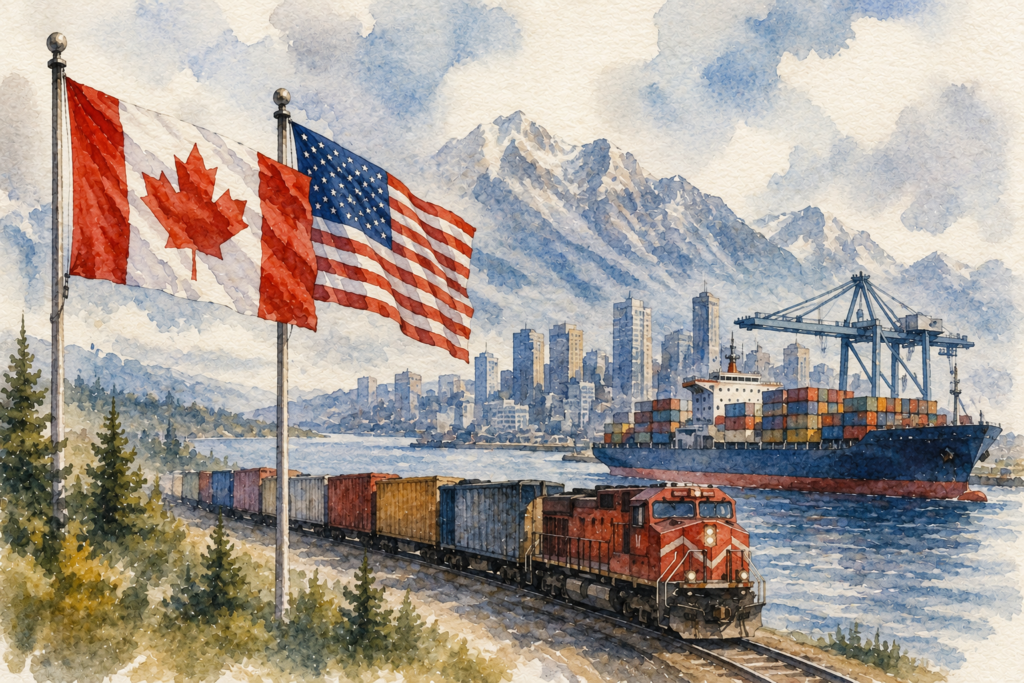
Real diversification would mean selling 125 units to America while also dramatically expanding sales to Europe, Asia, Latin America, and other global markets. Canada’s exposure to any single customer would decline, not because the American relationship became smaller, but because everything else became larger.
That distinction matters.
Canada’s productivity challenges have been discussed for years by economists, business leaders, and policymakers. The solution was never going to be producing less. It was always going to be producing more.
Once you view the issue through that lens, another question emerges.
Where will that growth come from?
Many people point toward Europe. Others point toward India. Various emerging markets are frequently mentioned as future opportunities. Eventually, however, every serious discussion about global trade arrives at the same unavoidable reality.
China is the second-largest economy in the world.
Acknowledging that fact does not mean Canada should become dependent on China. Replacing one dependency with another would solve nothing. It simply means that any serious conversation about Canada’s future must recognize the world as it exists, not as we wish it existed.
The debate often becomes trapped in arguments about whether one market is good or bad, whether one country is friend or rival, whether one region represents the future while another represents the past.
Those arguments miss the larger point.
The central question facing Canada is whether we are prepared to grow.
If Canada wants to sell more to the United States, more to Europe, more to Asia, and more to the rest of the world, then we must become more productive than we are today. We must build infrastructure. We must attract investment. We must develop our resources responsibly. We must improve our competitiveness. Most importantly, we must decide that growth itself is a national objective.
Canada possesses extraordinary advantages. We are politically stable. We are rich in natural resources. We have a highly educated workforce. We have access to global markets. We have enormous potential in energy, technology, agriculture, manufacturing, and critical minerals.
The challenge has never been a lack of opportunity.
The challenge is deciding what to do with it.
That is why I don’t believe this moment is fundamentally about tariffs. Nor is it primarily about trade deficits or political tensions between Ottawa and Washington.
It’s about Canada’s next chapter.
For much of our history, we have benefited enormously from living beside the world’s largest economy. The next stage of our development may be learning how to maintain that relationship while becoming a larger economic player ourselves.
Not by pulling away from America.
Not by replacing America.
By growing.
When I think back to that old book sitting on a shelf in my parents’ house, I don’t remember a story about dependence. I remember a story about confidence.
Two countries that understood who they were.
Two countries that traded together, worked together, and respected one another without feeling threatened by the relationship.
The goal is not to recreate the Canada-U.S. relationship of fifty years ago. The world has changed too much for that.
The goal is to bring that same confidence into a very different future.
A future where Canada remains America’s friend, continues doing business with America, and at the same time steps onto a larger stage than it occupies today.