

National | Immigration
Public Safety: CBSA Disrupts National Extortion Networks

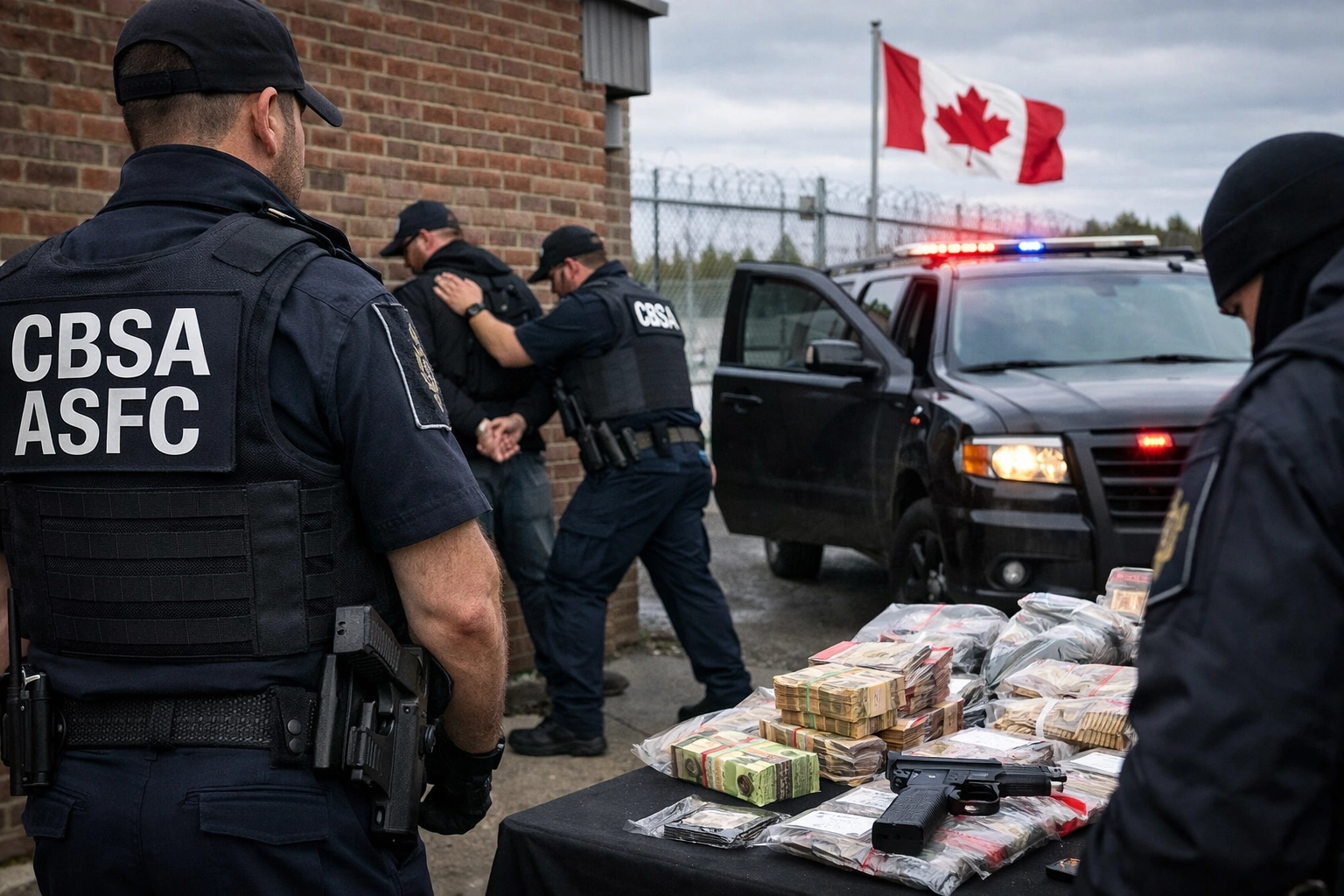
This morning, the Canada Border Services Agency (CBSA) confirmed a major escalation in its efforts to dismantle sophisticated extortion networks operating across the country. Following a series of coordinated investigations, the agency revealed that it has opened 372 immigration investigations into individuals suspected of being linked to these criminal syndicates. The announcement, made on March 18, 2026, marks a significant shift in federal enforcement strategy, prioritizing the removal of non-citizens who use the Canadian immigration system as a shield for organized criminal activity.
The surge in investigations follows a rising tide of extortion attempts that have plagued business owners and residents, particularly within immigrant communities. Federal officials indicate that these networks often employ violent tactics, including arson and firearms-related offenses, to coerce payments from their targets. As part of a broader crackdown, the CBSA has already issued 70 removal orders against individuals tied to these activities since August 2025, with 35 of those individuals having already been forcibly removed from Canadian soil.
Regional Expansion and the Scope of the Threat
The enforcement initiative initially launched in the Pacific and Prairie regions in the summer of 2025. These areas, particularly the Lower Mainland of British Columbia and cities like Calgary and Edmonton, were identified as early hotspots for extortion activities. However, as the criminal networks evolved and expanded their reach, federal authorities responded by extending the scope of the investigations to the Greater Toronto Area (GTA) in November 2025.
The move into the GTA represents a critical phase in the CBSA’s operational plan. By broadening the investigation to Canada’s most populous region, the agency aims to disrupt the logistical hubs that these networks use to coordinate their activities nationwide. According to internal reports, the extortion schemes are rarely isolated incidents; they are frequently connected to a broader web of national organized crime that includes drug trafficking and the illegal movement of weapons.

The Enforcement Mechanism: How Removal Orders Function
The CBSA’s strategy relies heavily on a partnership model with local law enforcement. Under this framework, municipal and provincial police services identify individuals suspected of criminal activity who also hold temporary or precarious immigration status. These individuals are then referred to the CBSA for a secondary investigation into their admissibility under the Immigration and Refugee Protection Act (IRPA).
If an investigation determines that a person is inadmissible due to organized criminality, the CBSA initiates the process for a removal order. This administrative path allows for the expedited removal of foreign nationals and permanent residents who have breached the conditions of their stay or engaged in serious criminal behavior. Of the 70 removal orders issued in connection to these extortion networks, the agency has prioritized those deemed the highest risk to public safety.
The 35 individuals already removed include high-profile cases that have served as a deterrent. For example, Arshdeep Singh, who arrived in Canada on a study permit in 2022, was removed under escort on January 19, 2026. Investigations found Singh to be inadmissible due to his involvement in organized criminality. Similarly, Sukhnaaz Singh Sandhu, a temporary resident who had been in Canada since 2016, was deported on February 3, 2026, following a lengthy investigation into his ties to extortion rings.
Community Impact: Focus on Surrey and the Lower Mainland
The impact of these extortion networks has been felt most acutely in Vancouver and its surrounding municipalities. Surrey, B.C., has emerged as a focal point for both the criminal activity and the subsequent law enforcement response. In 2025 alone, Surrey reported 133 cases of extortion, a figure that prompted the formation of the BC Extortion Task Force.
As of early 2026, 64 cases remain under active investigation in Surrey. The psychological and financial toll on the local business community has been substantial, with many entrepreneurs reporting a climate of fear. The CBSA’s intervention is intended to provide relief to these communities by removing the key agitators who facilitate these crimes.

Authorities emphasize that the criminals often target their own ethnic or cultural communities, exploiting newcomers’ unfamiliarity with the Canadian legal system or their fear of authorities. By targeting these networks, the CBSA and local police hope to restore a sense of security and encourage more victims to come forward without fear of reprisal.
Budget 2025 and the Expansion of Removal Capacity
The ongoing crackdown is supported by significant federal investment. Budget 2025 allocated $30.4 million specifically for "Canada’s Border Plan," a multi-year initiative designed to increase the agency’s capacity for immigration enforcement and removals. The federal government has set an ambitious target of 20,000 removals annually through the 2026–2027 fiscal year.
To meet these goals, the government is funding the recruitment and training of 1,000 new CBSA officers. This influx of personnel is expected to bolster border operations and provide more resources for the roughly 530 officers currently dedicated exclusively to immigration enforcement activities. At present, the agency is executing approximately 400 removals per week across the country, a pace that officials say is necessary to maintain the integrity of the immigration system.

The increased funding also covers the technical infrastructure required to track and manage complex organized crime cases. This includes enhanced data-sharing capabilities between the CBSA, the Royal Canadian Mounted Police (RCMP), and provincial task forces like Alberta’s Law Enforcement Response Team (ALERT).
Utilizing the Border Watch Line
A key component of the current enforcement strategy is the reliance on public participation. The CBSA operates a "Border Watch Line," a confidential tip line that allows residents to report suspicious activity or individuals who may be inadmissible to Canada. This morning's report indicates that tips from the public have been instrumental in launching several of the 372 active investigations.

The agency has encouraged anyone with information regarding extortion or the presence of individuals involved in organized crime to contact the tip line. Officials stress that these reports can be made anonymously and are vetted by specialized intelligence officers before any enforcement action is taken. This grassroots approach is seen as vital for penetrating the tight-knit social circles where extortionists often operate.
Contextualizing Organized Crime and Immigration
The disruption of these extortion networks is part of a broader federal push to address the intersection of immigration and public safety. As the government moves to manage the number of temporary residents in the country, there is a heightened focus on ensuring that those who are granted entry adhere strictly to Canadian laws.
Extortion is increasingly viewed not as a standalone crime, but as a gateway to more severe violence. Investigations have shown that the proceeds from extortion are frequently funneled back into international criminal organizations, fueling the illegal arms trade and the fentanyl crisis. By cutting off these domestic revenue streams through aggressive enforcement and removal, the CBSA aims to degrade the operational capacity of these groups on a global scale.
For further information on how these economic and security shifts are impacting the country, readers may consult the Canadianist analysis on the evolving landscape of federal policy.
Ongoing Operations in Toronto and Beyond
In Toronto, where the investigations were expanded last November, the CBSA is working closely with the Toronto Police Service to identify suspects linked to a series of high-profile retail extortions. While the number of removals in Ontario has not yet reached the levels seen in British Columbia, officials expect the figures to rise as more cases move through the administrative and legal systems.
The challenge for the CBSA remains the complexity of these cases. Proving "organized criminality" requires a higher burden of evidence than simple administrative violations, often involving months of surveillance and inter-agency cooperation. However, the 35 removals already completed serve as a proof-of-concept for the agency’s new, more aggressive stance.

As the federal government continues to implement its 2026–2027 removal targets, the focus on extortion networks is expected to remain a top priority for public safety officials. The CBSA has stated that it will continue to provide updates as more investigations reach the enforcement phase, maintaining a policy of transparency regarding the number of removals and the regions affected.
The agency’s message this morning is clear: the privilege of residing in Canada comes with the absolute requirement to respect its laws, and those who engage in the exploitation of Canadian communities will face the full weight of the country’s removal processes. For more updates on this and other national stories, visit our featured news section.