Economy
Trump Imposes 50% Tariffs on Broad Range of Canadian Goods, Deepening Trade Rupture
The United States administration announced its intention to impose a new 50 percent tariff on a significant swath of Canadian exports — including alcohol, dairy products, cement and hockey sticks, among other goods — with the measure set to take effect 30 days from Monday, July 20.

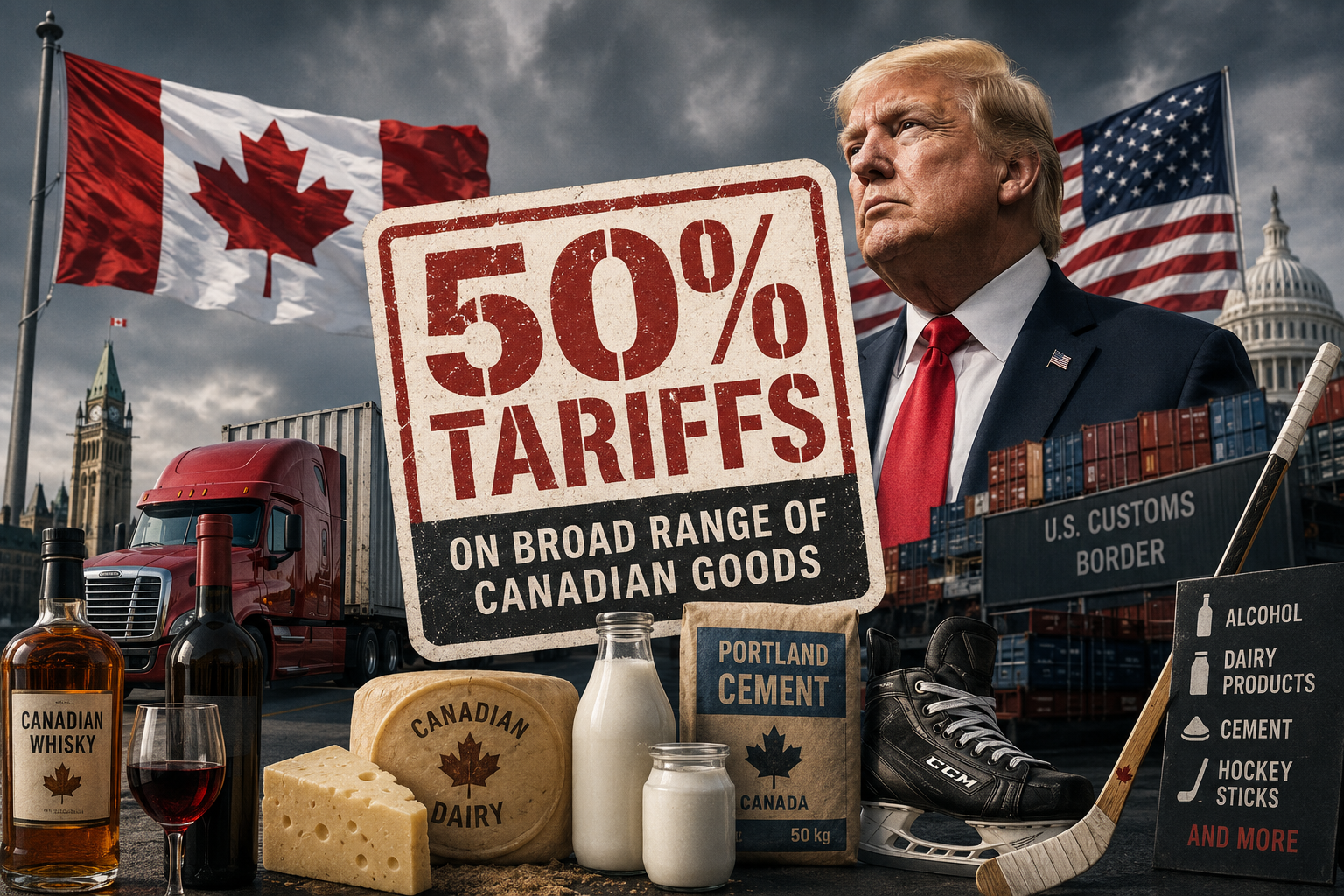
The United States administration announced its intention to impose a new 50 percent tariff on a significant swath of Canadian exports — including alcohol, dairy products, cement and hockey sticks, among other goods — with the measure set to take effect 30 days from Monday, July 20. The White House has framed the move as retaliation for provincial bans on U.S. liquor sales, Canada’s supply-managed dairy system, and quotas on certain U.S. vehicles. Energy, potash, fish and critical minerals are excluded from the new levy.
Prime Minister Mark Carney characterized the tariffs as the latest in a pattern of unilateral American trade actions that began with measures the government considers to be in violation of CUSMA, including tariffs on the Canadian auto sector. In a statement issued July 20, Carney said Canada “has merely matched” earlier U.S. measures and reaffirmed that Ottawa has tabled “a series of detailed and comprehensive proposals to resolve the dispute and modernize” CUSMA. Following a call with President Trump on July 21, Carney announced the two leaders had agreed to “deepen and speed up” negotiations over the coming weeks.
Conservative Leader Pierre Poilievre called the new tariffs “unjustified,” arguing Canadians “deserve better treatment,” while continuing to press the government on the broader economic toll of the ongoing trade dispute.
Why it matters: This is the most significant escalation in Canada-U.S. trade relations since CUSMA’s mandatory six-year review formally opened on July 1 without a 16-year extension being confirmed by all three parties — leaving the agreement in an annual-review holding pattern rather than the stability businesses had hoped for. A 50 percent tariff applied outside CUSMA’s protections targets politically sensitive sectors (dairy, alcohol) tied directly to provincial policy choices, effectively pulling premiers into a federal trade fight over jurisdictional matters. The timing — arriving three weeks into the annual-review period — signals Washington intends to use tariff pressure as continued leverage rather than treat the review as routine. Economically, the move complicates the Bank of Canada’s outlook; the Bank held its policy rate at 2.25 percent on July 15 partly on the assumption that CUSMA exemptions would hold, an assumption this announcement now strains.