
Economy
Trump Administration Imposes New “Forced Labour” Tariffs on Canada and 60+ Countries

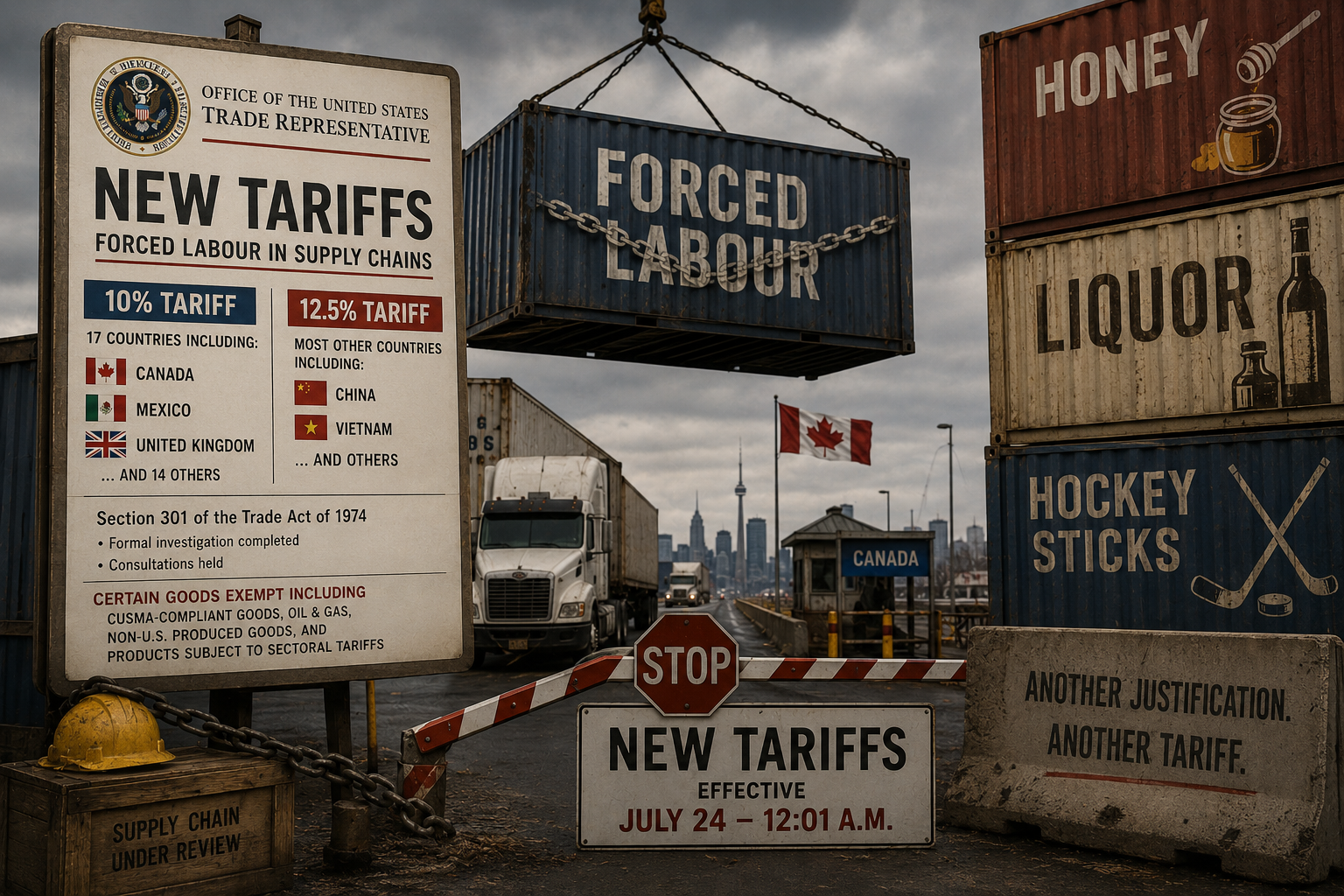
The Office of the United States Trade Representative announced Thursday that it is imposing new tariffs on goods from roughly 60 trading partners, citing failures to prevent forced labour in supply chains. Canada, Mexico and the United Kingdom are among 17 countries facing a 10 percent duty; most others, including Vietnam and China, face a steeper 12.5 percent rate. Five additional partners, including the European Union, will see smaller top-up levies calibrated to bring their total most-favoured-nation rate to one of the two thresholds. The measures take effect at 12:01 a.m. Friday, July 24 — the same moment a separate, temporary 10 percent global tariff imposed by the administration in February is set to expire.
USTR framed the lower 10 percent rate as recognition that Canada and the other 17 countries have “some prohibitions” on forced labour already in place, while the higher rate applies to countries deemed to have none. Goods compliant with the Canada-United States-Mexico Agreement (CUSMA) are expected to remain exempt, meaning the new levy is not expected to materially alter the tariff exposure Canadian exporters have faced since February. Certain categories — including oil and gas, goods not produced domestically in the U.S., and products already covered by sector-specific tariffs such as steel, aluminum and autos — are also carved out.
The action is being taken under Section 301 of the Trade Act of 1974, the legal mechanism the administration has increasingly relied on since the U.S. Supreme Court struck down the broader tariff authority used for the “Liberation Day” and fentanyl-related duties earlier this year. Section 301 requires a formal investigative record and consultation with affected governments — steps USTR undertook this spring — giving this round of tariffs a firmer legal foundation than the emergency-powers-based duties the Court invalidated.
Canadian government response: Trade Minister Dominic LeBlanc said in a statement that the move is part of a broader pattern of unilateral U.S. trade actions but is “not unexpected,” noting Washington had previously signalled its intent to replace the expiring baseline tariff. Canada has argued for months that its existing Fighting Against Forced Labour and Child Labour in Supply Chains Act — in force since 2020 — and Prime Minister Mark Carney’s commitment to further legislation should have exempted Canada from this category of action. Carney met with provincial premiers Thursday, part of a continuing pattern of federal-provincial consultation as trade pressure from Washington persists.
Context — the honey, liquor and hockey sticks tariffs: This announcement lands alongside a separate Trump measure signed earlier this week imposing 50 percent tariffs, effective next month, on a narrower basket of Canadian exports including honey, liquor and hockey sticks. The White House has tied that action to Canadian provincial restrictions on U.S. liquor sales, Canada’s supply-managed dairy system, and quotas on certain U.S. vehicles — a distinct retaliatory track from the forced-labour rationale.
Why it matters: Taken together, the forced-labour tariffs and the sector-specific escalation illustrate the administration’s continued search for durable legal tools to sustain a global tariff regime after the Supreme Court narrowed its emergency powers. For Canada, the practical trade impact of Thursday’s announcement appears limited given the CUSMA carve-out, but the episode reinforces two recurring dynamics the Desk has been tracking: Washington’s willingness to layer new justifications — fentanyl, reciprocity, forced labour, wildfire smoke — onto tariff actions as each legal basis is challenged, and the domestic political pressure this creates on Ottawa to demonstrate enforcement credibility on forced labour ahead of the CUSMA annual review process. Trump’s suggestion this week that he is also examining tariffs linked to Canadian wildfire smoke signals the list of stated grievances is unlikely to shorten.