

Opinion
The Country Grew. The Shirt Didn’t.
One of the things I keep coming back to is how easily we forget how young Canada actually is.We don’t look like a young country. We’re part of the G7. We’re the second largest country in the world by…

One of the things I keep coming back to is how easily we forget how young Canada actually is.
We don’t look like a young country. We’re part of the G7. We’re the second largest country in the world by land mass. We hold international influence, sign global trade agreements, and maintain one of the largest trading relationships in the world with the United States.
Canada presents itself on the world stage as a mature, established country. So we naturally measure ourselves against other established countries.
Those comparisons leave out something fundamental.
We Compare Ourselves to Ancient Company
England’s institutions developed over centuries of kings, monarchs, and parliamentary evolution. France has lived through kingdoms, revolutions, and republics. Italy traces its civilization back to Rome. China measures its history in thousands of years. Even the United States is celebrating its 250th anniversary this year.
Canada?
Confederation happened in 1867. The Statute of Westminster gave Canada legislative independence in 1931. Our Constitution came home in 1982.
There are millions of Canadians alive today who were born before Canada gained full control of its own Constitution.
We’ve spent much of our history figuring out what Canada is, how it should work, and what holds such an enormous and diverse country together.
Canada is a very young country.
We Mistake Stature for Age
We’ve grown so quickly and achieved so much that we sometimes confuse our international standing for institutional age. We judge ourselves alongside countries whose systems have been tested, discarded, rebuilt, and refined over hundreds or even thousands of years.
Then we look at the strain in our own systems and conclude that Canada is failing.
I don’t think that’s what’s happening.
Canada has reached a kind of adolescence as a country, and we’re feeling the growing pains that come with it. Our population has more than doubled within the lifetime of millions of Canadians. Our cities have expanded. Our economy has changed. The country has become more urban, more diverse, and far more complex. Technology has reshaped how we work, communicate, and take part in public life.
Many of the systems carrying all that growth were designed for a much smaller Canada.
The Shirt You Outgrew
Those systems are like a favourite shirt from childhood. The one you always reached for. It fit once. It served you well. You wore it because it was comfortable and familiar.
Then one day you go to put it on and discover it doesn’t fit anymore.
There was nothing wrong with the shirt. You grew.
That’s the heart of the analogy. The shirt isn’t one particular policy, institution, or level of government. It stands for the systems Canada inherited or built at an earlier stage in its development. We kept returning to them because they worked. Over time we grew so used to wearing them that we stopped asking whether they still fit the country they were meant to serve.
The country grew. The shirt didn’t.
You Can See the Strain Almost Everywhere
Healthcare systems built around an earlier population and different demographics are straining under demands they were never designed to absorb. Infrastructure built for one era is being asked to carry another.
Municipal governments are responsible for increasingly complex cities without the authority or the revenue tools to manage them properly. Immigration, housing, and labour planning continue as separate conversations when each one directly shapes the others.
Our electoral system is another example. First past the post came to a young federation operating in a very different political and social environment. It still produces governments and follows its original rules. It no longer reflects the full political diversity of the country it serves.
These systems haven’t necessarily failed. In many cases, they worked long enough for Canada to outgrow them.
Outgrowing Is a Different Diagnosis Than Failing
The distinction matters more than it first appears, because the two diagnoses point to opposite remedies. One says tear it down. The other says resize.
If we call this failure, we start looking for someone to blame. We reject the country’s history and declare that everything previous generations built was a mistake.
If we call it outgrowth, the whole picture changes.
We can respect the systems that carried Canada this far while recognizing that the country they were built for no longer exists in the same form. We keep the good work and adjust the fit. That’s stewardship, not collapse.
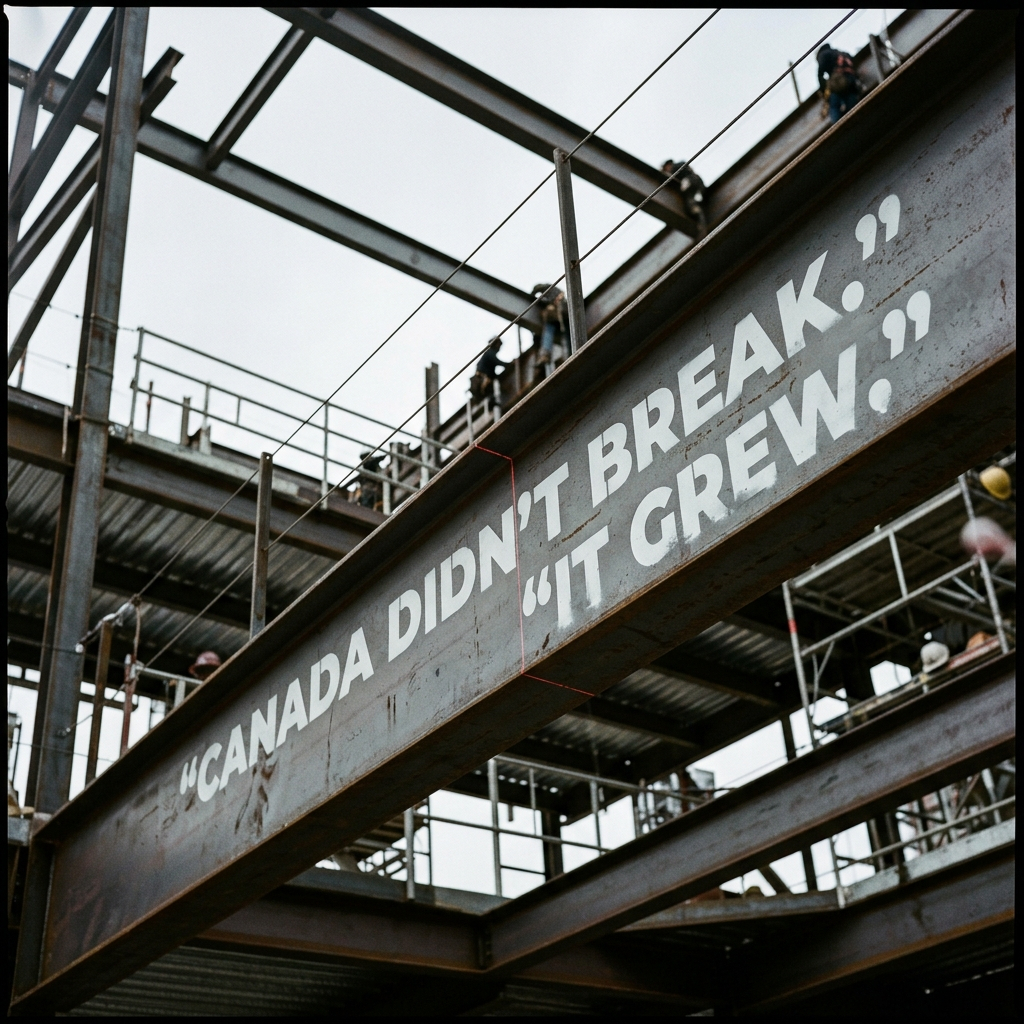
Canada didn’t break. It grew.
I’ve spent years building things and employing people, and I’ve also stood on the other side of institutions that were very good at processing rules and decisions yet slow to see the actual person living with the outcome. That’s the vantage point I keep returning to. A structure can run perfectly by its own internal logic while no longer matching the human reality in front of it.
That gap is where the strain lives. Not in the people standing inside the structure. In the distance between how fast the country moved and how slowly its supporting frameworks moved with it.
Modernizing Is Nation Building
A young country shouldn’t feel embarrassed by any of this. Modernizing our institutions is part of building the nation.
England, France, Italy, China, and the United States didn’t arrive at their present systems fully formed. Their institutions evolved because their countries did. Every mature system you admire is the result of someone deciding the old one no longer fit and choosing to build a better one.
Canada’s evolution isn’t over either.
The shirt fit the country we were. It served us well. Canada kept growing, and eventually the shirt stopped fitting.
It’s time to make one for the country we’ve become.
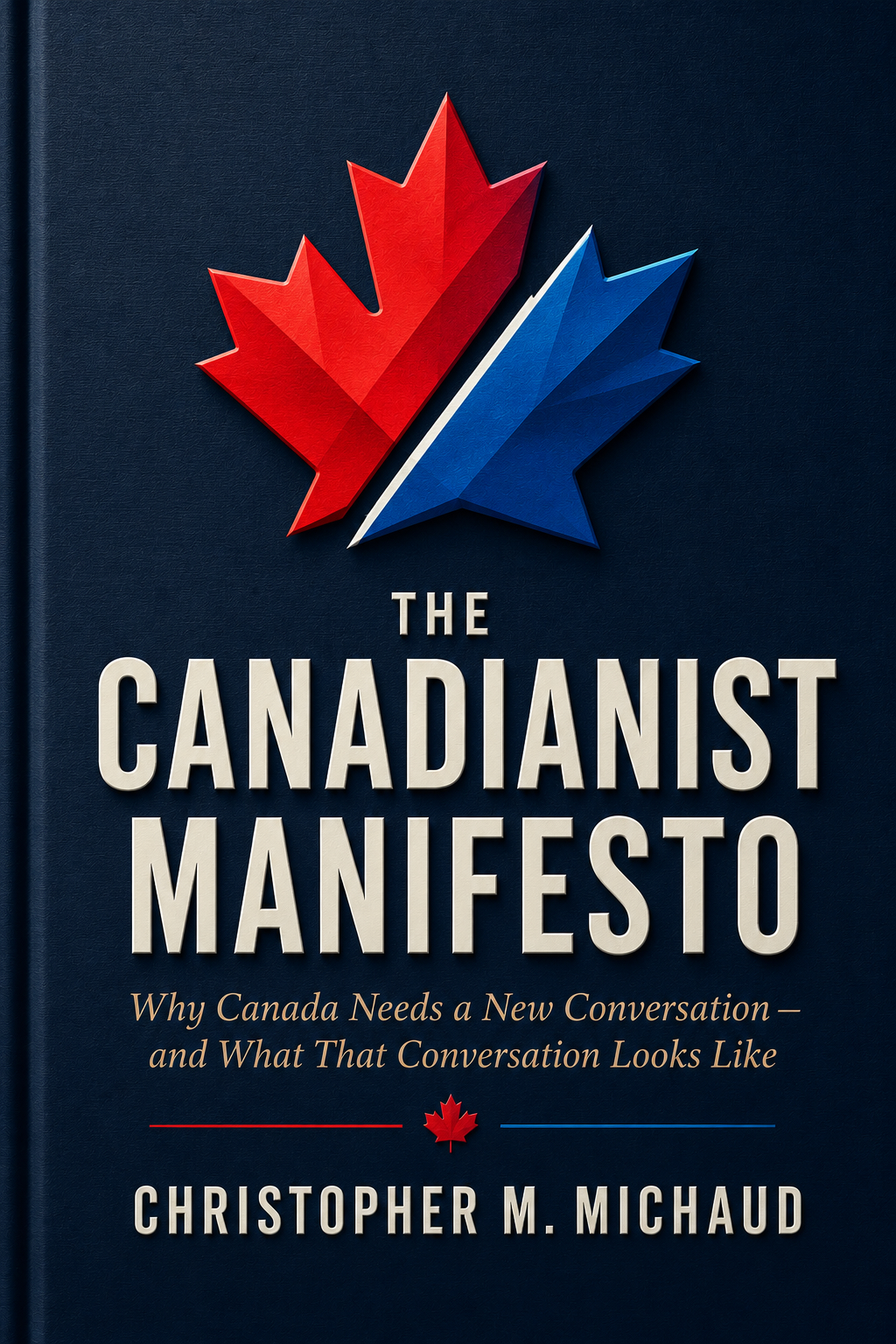
If that idea gives language to something you’ve already been feeling, you’re not alone in noticing it. I go much deeper into this in The Canadianist Manifesto — if you want the full argument for what Canada has outgrown and what building the next version actually looks like, that’s where to start. The center isn’t empty. It’s been waiting for people willing to build the next thing carefully, with respect for what came before.
Christopher M. Michaud
Founder, United Canadian Centrist Party
uccparty.ca | Join Us And Be Heard.
