Toronto | East of the City
Ottawa Said No to Billy Bishop Jets. Doug Ford Isn’t Done Fighting Toronto.

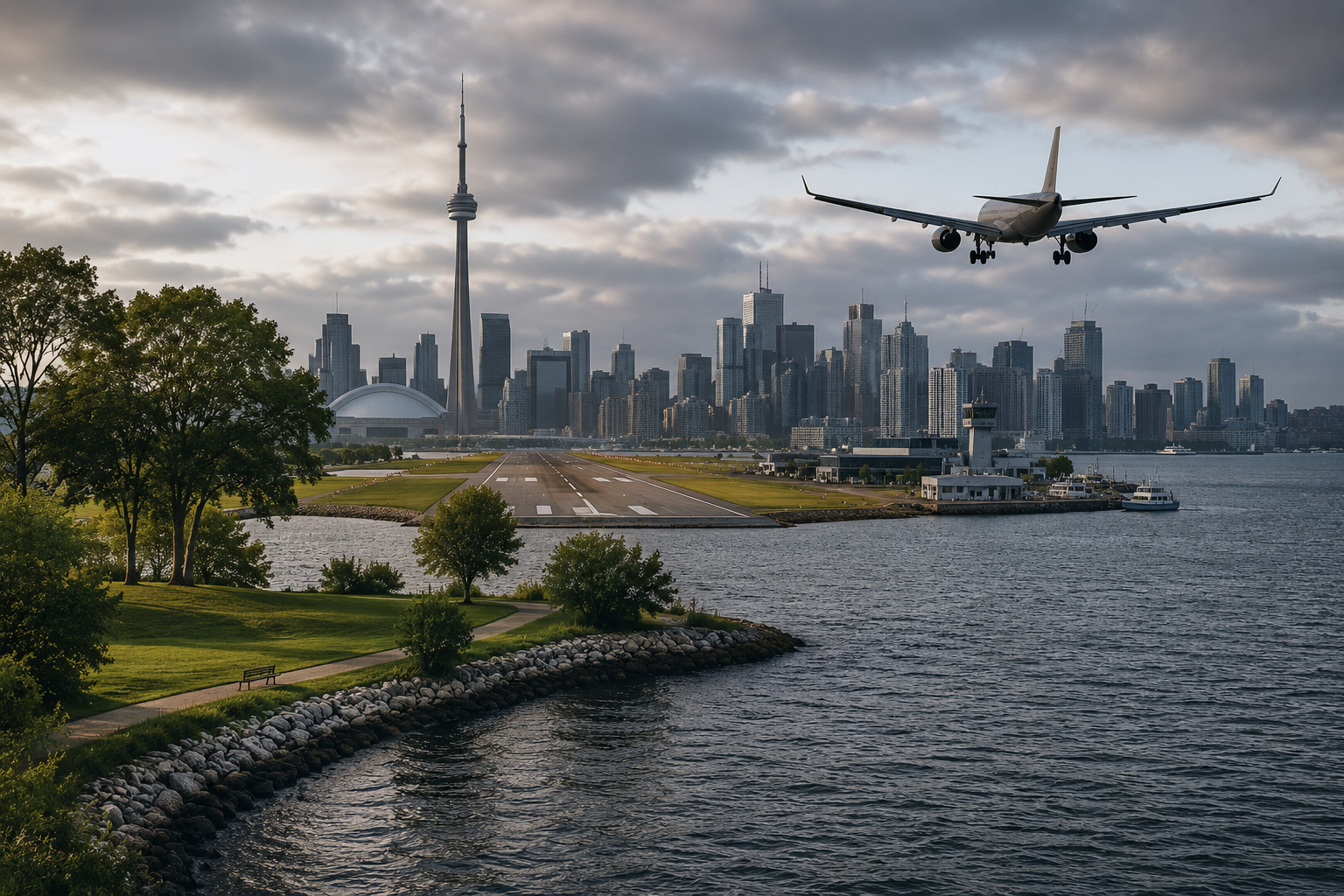
TORONTO — Ottawa has rejected Ontario’s plan to bring jets to Billy Bishop Toronto City Airport. Toronto wants its waterfront land protected and its authority over the airport restored. Doug Ford’s government, however, isn’t backing away.
That leaves Toronto in a peculiar position heading into the fall.
The airport expansion that prompted Queen’s Park to intervene directly in the city’s waterfront is, for now, not going ahead. But the provincial legislation that made that intervention possible remains in place.
The federal government rejected Ontario’s proposed expansion of Billy Bishop in late July after a Transport Canada consultation received more than 87,000 responses. According to the federal results, 87 per cent opposed the proposal.
Federal Transport Minister Steven MacKinnon said Ottawa would not pursue plans that would infringe on public spaces including Little Norway Park or Hanlan’s Point Beach, increase noise or environmental impacts, or interfere with Toronto’s ability to build housing.
Ottawa instead says its attention is on safety improvements already approved for the airport.
Those improvements are real, but they’re a separate project. Construction began this summer on new Runway End Safety Areas at both ends of Billy Bishop’s main runway, a federally mandated safety project approved by Toronto in 2024. They don’t amount to approval for the much larger expansion sought by Queen’s Park.
Ontario has made clear it considers the federal rejection a setback rather than the end of the argument.
Transportation Minister Prabmeet Sarkaria said after Ottawa’s decision that the province would continue pushing for modernization of the airport, accusing the federal government of listening to what he called a “small fringe group” in Toronto.
Calling the opposition fringe is difficult to square with the consultation numbers. More than 87,000 responses is a substantial public response to an infrastructure consultation, and opposition wasn’t narrow. It was overwhelming.
The larger unresolved question, however, is no longer about aircraft.
It’s about the land.
Queen’s Park passed the Building Billy Bishop Airport Act this spring, giving the province extraordinary authority over the city’s role in the airport.
The legislation allows Ontario to prescribe city-owned land identified in eight property records and have that land vest directly in the Crown. Once prescribed, associated city-owned buildings, structures and improvements can also transfer to provincial control.
The law goes further.
It prevents Toronto from selling, encumbering or otherwise disposing of affected property and allows the province to replace the City of Toronto as a party to the Tripartite Agreement governing Billy Bishop Airport.
City staff identified the affected property as including approximately 434 hectares of Toronto Islands land and water and another 3.75 hectares of land and rights-of-way around Bathurst Quay. Parts of Little Norway Park are among the areas potentially affected.
Queen’s Park didn’t simply overrule a Toronto planning decision.
It gave itself the legislative machinery to remove Toronto from an agreement governing an airport sitting on Toronto’s waterfront and take control of city-owned property required for the province’s plans.
The federal government has now rejected those plans.
The machinery remains.
That’s why the fight didn’t end when Ottawa said no to jets.
Toronto City Council has demanded that the province reverse course, with Mayor Olivia Chow framing the dispute around the city’s waterfront and public lands.
The political divide is becoming increasingly difficult to separate from the broader relationship between Chow and Ford.
Ford’s government argues that expanding Billy Bishop would increase transportation options and strengthen Ontario’s economy and tourism sector. Those objectives are written directly into the preamble of the provincial legislation.
Toronto has been asking a different question: what does the expansion cost the city around the airport?
City planning staff have examined potential effects on housing, transportation and Inner Harbour water quality, along with the implications for Bathurst Quay and the Toronto Islands. They also noted earlier this summer that the province and Toronto Port Authority had announced their expansion ambitions outside the established Tripartite Agreement and that the city had not been provided with specific expansion plans at the time of its report.
Those disagreements might ordinarily be settled through negotiations among the three governments and the airport authority.
Ontario changed that equation when it legislated Toronto out of the way.
The federal rejection has therefore created an unusual second act to the Billy Bishop dispute.
Had Ottawa approved the expansion, the province could argue that its intervention was necessary to deliver a major transportation project it considered important to Ontario.
Ottawa didn’t approve it.
That leaves Queen’s Park holding powers over Toronto land that were obtained for an airport expansion the federal government currently refuses to authorize.
It also gives Chow a potent issue heading into the fall.
Billy Bishop combines several political arguments that work particularly well for a Toronto mayor: local control, waterfront preservation, parks and public land, and resistance to provincial interference in municipal decisions.
Ford, meanwhile, has shown little inclination to concede the broader argument. His government continues to see Billy Bishop as an economic asset whose potential is constrained by its existing operating rules.
There is a legitimate policy debate there.
Billy Bishop is an unusually located airport serving the country’s largest city. Business and aviation groups have argued that its restrictions limit its usefulness. Opponents counter that an island airport beside a dense downtown and heavily used waterfront can’t be treated like an airport surrounded by industrial land.
Ottawa has made its decision for now.
Toronto has made its position clear.
Queen’s Park hasn’t changed its mind.
So the next phase of the Billy Bishop fight may have considerably less to do with whether a jet ever lands there.
Toronto wants control of its waterfront protected. Ontario has passed a law giving itself the power to take some of that land and replace the city in the agreement governing the airport. The federal government has rejected the project that prompted Queen’s Park to do it.
The question for Ford now is why those powers are still necessary.
And if the province intends to keep them, Toronto deserves to know what it intends to do with them.